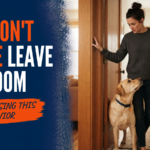
Most dog owners ask trainers about methods and prices, but almost no one asks the one question that determines whether results will actually last at home.
The answer has nothing to do with training technique, and everything to do with where your dog sleeps at night.

Key Takeaways
- Where a dog lives during board and train, not just where it trains, is one of the most overlooked factors in whether results stick at home.
- Dogs don’t generalize rules between environments automatically; a skill learned in a kennel won’t automatically transfer to a living room.
- Home-based programs build real-world manners because the training environment is the real world, door routines, mealtimes, household traffic, and all.
- We at Camp Lucky Board and Train structure our four-week curriculum specifically around this principle, progressing from home manners to off-leash reliability in public spaces.
- Two simple questions, asked before signing any contract, can tell you almost everything about whether a board and train program will actually work for your family.
Most dog owners researching board and train programs spend a lot of time comparing prices, reading reviews, and watching trainer videos.
Very few ask the one question that separates programs producing lasting change from those producing short-lived results: where will my dog actually be sleeping?
That single detail shapes nearly everything else.
Where Your Dog Sleeps During Training Changes Everything
Consider two scenarios.
In the first, a dog spends two weeks in a kennel run.
A dog trainer arrives each morning, works through obedience drills for a few hours, then leaves.
The dog returns to its run, surrounded by barking dogs, unfamiliar smells, and the dull hum of a commercial facility, until the next morning.
In the second scenario, the same dog wakes up in a trainer’s home.
It practices sitting before going outside.
It learns to stay off the counter while someone makes breakfast.
It settles on a place cot while the household moves around it.
Both dogs are in training.
Only one is learning the behaviors their owner actually needs.
The environment where a dog trains is not just a backdrop, it’s an active part of what gets taught.
Behaviors are always learned in context, and context is something kennel walls simply can’t replicate.
This is the reasoning behind how we at Camp Lucky Board and Train are built: the home is the training facility, because the home is where the behavior has to work.
Why Dogs Don’t Generalize Between Environments
It’s easy to assume that a trained dog is a trained dog, that a solid sit in a kennel means a solid sit on your kitchen floor.
Dog learning science says otherwise, and understanding this is one of the most valuable things you can do before choosing any training program.
Dogs Learn Through Patterns and Association, Not Abstract Rules
Dogs are pattern-based learners.
When a dog learns to sit in a quiet, controlled room with a familiar trainer, what it’s actually learning is a complex bundle: this person, this space, this smell, this type of moment, and the reward that follows.
The pattern is specific.
Change one major element of that pattern, walk the dog into a kitchen full of smells and noise, and the association breaks down.
One trainer described a terrier that performed flawlessly during controlled sessions, only to appear completely untrained the moment it stepped outside with real-world distractions around it.
That dog hadn’t failed.
It had learned exactly what it was taught, just not in a form that transferred.
Consistent environments help dogs build reliable patterns faster.
When training happens in the same type of space where a behavior will be needed, the pattern holds.
When it doesn’t, there’s a gap, and that gap is almost always discovered the day the dog comes home.
The Kennel Problem: Trained There, Untrained at Home
The American Kennel Club has noted that a dog learning a new skill in a board and train facility won’t automatically understand that those same rules apply in the owner’s home.
That’s not a critique of any one trainer, it’s a structural reality of how dogs learn.
Kennel-based programs often produce dogs that perform beautifully on pickup day and then seem to forget everything within a week.
The dog isn’t being defiant.
It’s operating in an environment where the training patterns it built simply don’t match what it’s experiencing now.
The food bowls are different.
The floors sound different.
The people are different.
Every cue it was trained to recognize is missing.
Home-based training addresses this from day one, because the training context is already close to the one the dog will return to.
The gap between where it learned and where it needs to perform shrinks dramatically.
What Home-Based Board and Train Actually Looks Like
The phrase home-based training sounds straightforward, but the practical difference in daily experience, for the dog, is significant.
It’s not just about sleeping somewhere more comfortable.
It’s about what gets practiced, and when.
Door Manners, Counter Manners, Real Mealtimes
In a home environment, certain situations happen naturally and repeatedly throughout the day.
Someone leaves for work.
A delivery arrives.
Dinner gets cooked.
These aren’t manufactured training scenarios, they’re just life.
And in a home-based program, they become training reps.
A dog learning door manners in a real home practices them every single time a door opens.
A dog learning not to counter surf does so while actual food is being prepared, with real smells, real temptation, and real consequences for making the right choice.
That repetition in authentic conditions is what builds a behavior reliable enough to hold when the owner is the one at the door, or the one cooking.
As our founder Aaron Rustici puts it: It allows the most realistic scenario, people walking around, the dog in their kennel at night, obedience around breakfast, lunch and dinner.
Crate Training in an Actual Home
Crate training is one of the most environment-dependent skills a dog can develop.
A dog that learns to settle calmly in a crate at a kennel has learned to do that in a kennel.
The sounds, rhythms, and routines around it are completely different from what it will experience at home.
When crate training happens inside a real house, the dog learns to settle against the backdrop of household sounds: a TV in the next room, footsteps on hardwood, someone opening the refrigerator.
Those are exactly the sounds it will hear at home, so the calm it builds there transfers directly.
There’s no adjustment period, no regression.
The behavior was built in the right place from the start.
Daily Household Routines as the Training Environment
Beyond specific commands, there’s something harder to name but equally worth noting: learning to exist calmly inside a functioning household.
That means not spinning out when the energy level in the room changes.
It means staying relaxed on a place cot while people move around.
It means being a dog a family can actually live with.
That kind of behavioral stability isn’t taught in a single session.
It’s built through consistent exposure to the texture of daily life, meals, visitors, downtime, activity.
A trainer’s home provides exactly that.
A kennel run, by design, cannot.
Kennel Facilities: The Hidden Structural Limits
Kennel-based programs aren’t run by bad trainers.
The limitation is structural, not personal.
The physical environment creates constraints that no amount of trainer skill can fully overcome.
Structured Sessions, Then Hours in a Noisy Kennel
The typical model at a kennel-based facility looks like this: a trainer works with the dog for four to five hours out of an eight-hour workday, then goes home.
For the remaining sixteen-plus hours, the dog sits in a run while other dogs bark around it.
That’s not a training environment, it’s a waiting environment.
Sitting in a stressful, noisy, unfamiliar space doesn’t reinforce anything useful.
It creates a sharp split in the dog’s day between training mode and survival mode.
The deeper problem is that dogs can’t always distinguish between those states when they get home.
The stress carries over.
Stress and Anxiety Can Create New Problems
Moving a dog into a strange facility with unfamiliar people, routines, and a constant chorus of other dogs is inherently stressful for most animals.
That kind of environmental stress can trigger anxiety, withdrawal, and even the development of new behavioral issues that weren’t present before the program began.
A dog that came in for leash reactivity and comes home with a new separation anxiety problem hasn’t been helped, it’s been set back.
Stress-based learning is fragile learning.
Behaviors acquired under chronic arousal are harder to generalize, harder to maintain, and more likely to collapse under pressure.
Home-based environments reduce that ambient stress load, which gives learning a more stable foundation to grow from.
How Our Programs Are Matched to Your Dog’s Real Needs
One of the practical advantages of a well-structured home-based program is that training can be tiered by what a dog actually needs, not forced into a one-size-fits-all model.
We at Camp Lucky organize our curriculum into four week-based programs, each with a distinct focus that builds on the last.
1. Week One: Home Manners and Basic Obedience
The foundation week keeps training entirely within the home environment.
Dogs are introduced to core commands, sit, down, heel, place, off, and load, and work through the everyday manners that matter most: no jumping, no barking, no counter surfing, no bolting through doors.
This is the behavioral baseline every dog needs before anything else can be layered on top.
It’s the right starting point for puppies, newly adopted dogs, or any dog beginning its training journey regardless of age.
2. Week Two: Off-Leash in Real Public Spaces
Once home manners are solid, week two takes training into the real world.
Dogs begin distraction desensitization, learning to stay calm and responsive at hardware stores, parks, basketball courts, and restaurants.
Off-leash reliability is introduced here using the ET300 by E-Collar Technologies as the primary communication tool.
The goal isn’t a perfectly controlled dog in a controlled space.
It’s a dog that actually works when the world is noisy, unpredictable, and full of things that would have previously set it off.
3. Week Three: Behavioral Issues and Advanced Work
By week three, a trainer has spent enough time with the dog to have a clear picture of its individual challenges.
This tier serves two groups: owners who want high-precision obedience, and dogs with specific issues, mild fear responses, moderate reactivity, situational anxiety, that need targeted work beyond basic commands.
Training becomes increasingly customized to the dog’s actual behavioral profile rather than a general curriculum.
4. Week Four: Aggression, High Stubbornness, Full Transformation
The four-week program is reserved for dogs with significant behavioral histories, documented bites, high-level aggression, extreme stubbornness.
Aaron Rustici notes that certain breeds, Huskies being a specific example, should default to this tier simply because of how long genuine behavioral change takes with a high-drive, independent-minded dog.
Week four is about repetition and immersion: placing the dog in its triggering scenario over and over in a structured way until the new response becomes the dog’s default, not a trained exception.
Two Questions Every Dog Owner Should Ask First
Before signing with any board and train program, home-based or otherwise, two questions cut through the marketing and get to what actually matters.
First: Where will my dog be staying?
Not training, staying.
If the answer is a kennel run, that’s useful information.
If the answer is inside a trainer’s personal home, ask what a typical day looks like.
The specifics reveal whether the living environment is actually integrated into the training or just adjacent to it.
Second: What tools and methods do you use, and why?
A trainer who can explain their methodology clearly, what they use, what they don’t, and the reasoning behind each choice, is a trainer who understands what they’re doing.
Vague answers, evasion, or an inability to explain how a tool is used humanely are warning signs.
Transparency here isn’t just about ethics; it signals whether the trainer can also teach the owner to maintain the training once the dog is home.
These two questions alone will reveal more about a program’s likely effectiveness than any number of five-star reviews.
Home-Based Training Isn’t a Perk — It’s the Point
There’s a tendency to think of a home-based board and train as a premium add-on, a nicer experience for the dog, a softer sell for anxious owners.
But the home environment isn’t a comfort feature.
It’s the training mechanism.
Dogs learn in context.
Behaviors hold in the environments where they were built.
A dog trained in a real home, practicing real manners, living inside real routines, experiencing real daily life, brings those patterns back with it, because it’s already been living them.
That’s not a philosophical preference.
It’s how dog learning actually works.
The question of where a dog sleeps during training isn’t a secondary detail to check after choosing a program.
It’s the primary factor worth asking about first.
To see what a structured, home-based board and train program looks like in practice, we at Camp Lucky Board and Train offer free in-home consultations across multiple locations and work with dogs of any breed, age, or behavior level.