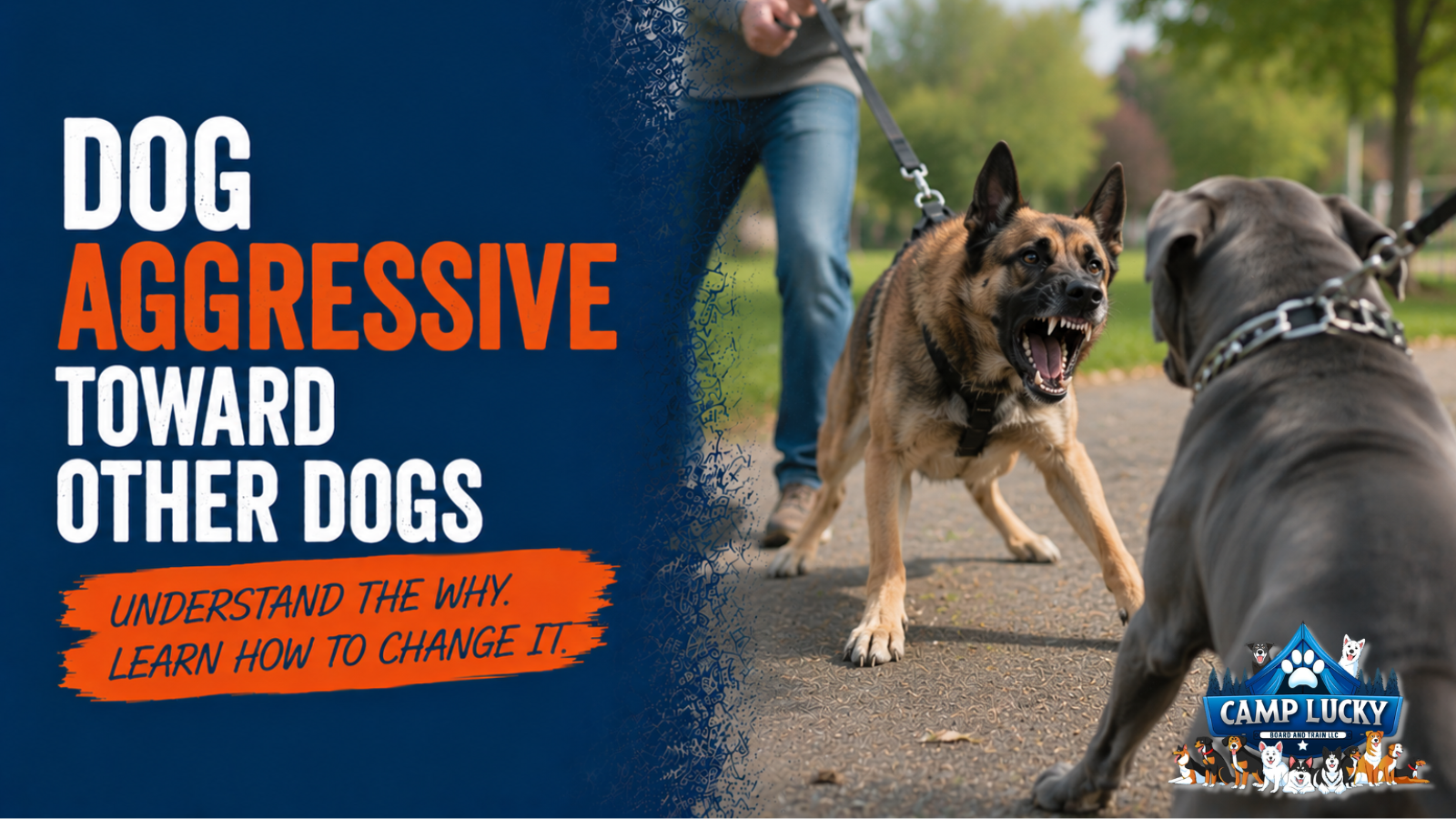
Your dog’s lunging and snapping at other dogs isn’t about dominance, it’s driven by two very different emotional states that most owners completely misidentify.
Understanding whether your dog is reacting from fear or frustration changes everything about how you should respond.
Key Takeaways
- Dog aggression toward other dogs stems primarily from two emotional states: fear-based defensive responses and frustration from barrier restraint, each requiring different training approaches.
- Fear-based aggression shows distinct warning signs like tucked tails and flattened ears, while frustration aggression often escalates from excited whining to lunging when dogs can’t reach their target.
- Reactivity and true aggression differ significantly, reactivity involves overreaction without intent to harm, but untreated cases can progress into dangerous aggression over time.
- Professional systematic desensitization works below a dog’s emotional threshold, while common owner mistakes like “flooding” exposure actually worsen aggressive responses.
- Board and train programs provide controlled environments and rapid repetition that home training cannot replicate for severe inter-dog aggression cases.
When dogs lunge, snap, or attack other dogs, owners often feel overwhelmed and confused about what’s driving the behavior.
The reality is that most inter-dog aggression isn’t about dominance or meanness, it’s rooted in emotional distress that professional trainers can identify and address through targeted approaches.
Fear vs. Frustration: The Two Hidden Drivers Behind Dog-to-Dog Aggression
Professional dog trainers recognize that inter-dog aggression primarily stems from two distinct emotional states, each requiring completely different treatment strategies.
Fear-based aggression occurs when dogs perceive other canines as threats to their personal safety, triggering defensive responses designed to increase distance from the perceived danger.
This type of aggression often manifests as lunging while retreating, barking from a defensive position, or snapping when the dog feels cornered with no escape route.
Frustration-based aggression, on the other hand, develops when dogs want to interact with other dogs but are prevented from doing so by physical barriers like leashes or fences.
This barrier frustration can escalate from excited whining and pulling into aggressive displays that appear threatening but actually stem from thwarted social motivation.
Our trainers at Camp Lucky Board and Train work with dogs experiencing both types of aggression, helping owners understand that the underlying emotional state determines the most effective training approach.
The critical distinction lies in the dog’s intent and emotional experience.
Fear-driven dogs are trying to escape or create safety, while frustration-driven dogs are trying to access something they want.
Misidentifying which category applies can lead to training methods that worsen the problem rather than resolve it.
How Fear-Based Aggression Actually Works in Your Dog’s Mind
1. The Defensive Distance-Making Response
Fear-based aggression operates as a distance-making behavior where dogs attempt to drive away perceived threats through intimidating displays.
When a fearful dog sees another dog approaching, their brain processes this as a potential danger requiring immediate action.
The aggressive behavior, whether growling, lunging, or snapping, serves a specific function: making the “threat” go away.
Unfortunately, this strategy often works from the dog’s perspective, as other dogs or their owners typically retreat when confronted with aggressive behavior.
This success creates a reinforcement cycle that strengthens the aggressive response over time.
Each time the fearful dog’s display causes another dog to move away, the behavior gets reinforced as an effective survival strategy.
The dog learns that aggression equals safety, making the behavior more likely and more intense in future encounters.
2. Body Language Red Flags Before the Explosion
Fear-based aggression rarely appears without warning signs, though owners often miss the subtle signals that precede an explosive reaction.
Dogs displaying fear-motivated aggression typically show a tucked tail, flattened ears against their head, and deliberate avoidance of direct eye contact with the approaching dog.
Their body posture tends to be low and tense, with weight shifted backward as if preparing to retreat.
Other warning signals include excessive panting when not overheated, trembling, attempting to hide behind their owner, or trying to move away from the approaching dog.
These dogs may also exhibit displacement behaviors like excessive sniffing of the ground, scratching, or yawning when they’re actually stressed rather than tired.
Recognizing these early warning signs allows owners to intervene before the situation escalates to aggressive displays.
3. Why Socialization Windows Matter More Than You Think
The foundation for fear-based aggression often gets laid during puppyhood, specifically during the critical socialization window that closes around 14-16 weeks of age.
Puppies that don’t receive adequate, positive exposure to other dogs during this narrow timeframe are significantly more likely to develop fearful responses toward unfamiliar dogs later in life.
Even a single frightening encounter with another dog during this sensitive period can create lasting fear conditioning that emerges as aggression in adolescence or adulthood.
This neurological reality explains why some dogs seem fine as puppies but develop aggression problems between 12-36 months of age.
Social maturity brings hormonal changes that can amplify previously dormant fears, turning a seemingly well-adjusted puppy into a reactive adolescent.
Early socialization isn’t just about exposure, it’s about creating positive associations that will protect against fear-based responses throughout the dog’s life.
When Excitement Becomes Aggression: Understanding Frustration-Based Reactions
The Leash as a Trigger Amplifier
Leash aggression represents one of the most common forms of frustration-based reactivity, where dogs that appear calm when off-leash become explosive when restrained.
The leash removes the dog’s natural coping mechanisms, they can’t use their normal flight response, can’t perform natural greeting rituals like circling and sniffing, and can’t control their approach angle to other dogs.
This loss of choice and control creates frustration that can quickly escalate into aggressive displays.
The restraint itself becomes part of the problem as dogs learn to associate the feeling of leash tension with the presence of other dogs.
When owners instinctively tighten the leash upon seeing another dog, they inadvertently signal to their pet that something threatening is approaching.
This creates a conditioned response where leash pressure becomes a predictor of stress, amplifying the dog’s arousal even before any interaction occurs.
From Whining to Lunging: The Escalation Pattern
Frustration-based aggression follows a predictable escalation pattern that begins with excitement and gradually intensifies into threatening behavior.
Dogs experiencing barrier frustration typically start with excited behaviors like whining, pulling toward the other dog, or dancing on their hind legs.
Their tail may be wagging, and their overall body language appears enthusiastic rather than fearful.
As the frustration builds from being unable to reach their target, the excitement transforms into more aggressive displays.
The whining becomes barking, the pulling becomes lunging, and the wagging tail may stiffen into a more threatening posture.
This progression can happen within seconds, making it appear as though the dog suddenly “snapped” when in reality they were expressing mounting frustration that crossed a threshold into aggressive behavior.
Reactivity vs. True Aggression: What Professional Trainers Look For
1. Intent to Harm vs. Overreaction to Stimuli
Professional dog trainers make important distinctions between reactivity and true aggression based on the dog’s intent and behavioral sequence.
Reactivity involves an overreaction to environmental stimuli without genuine intent to cause harm, the dog is essentially having an emotional overload that manifests as barking and lunging.
True aggression, however, involves a calculated behavioral sequence with clear intent to challenge, threaten, or injure another dog.
Reactive dogs often display what trainers call “all bark and no bite,” their displays are dramatic and loud but lack the focused intensity seen in truly aggressive encounters.
Their barking tends to be rapid and high-pitched, their movements are often erratic, and they may even play-bow between aggressive displays.
Truly aggressive dogs show more controlled, deliberate behavior with hard stares, stiff body postures, and calculated approaches toward their target.
2. How Untreated Reactivity Becomes Dangerous
The critical danger lies in how untreated reactivity can progress into genuine aggression over time.
Each reactive episode strengthens the neural pathways associated with aggressive responses, making the behavior more automatic and intense.
Dogs that start with simple overreactions can develop genuine aggressive intent as their arousal patterns become deeply ingrained and their tolerance for other dogs decreases.
This progression happens gradually, often over months or years, which is why owners may not realize their dog’s behavior is escalating until a serious incident occurs.
The dog’s threshold for triggering continues to lower, meaning they become reactive at greater distances or with less provocation.
Eventually, what began as manageable reactivity can develop into unpredictable aggression that poses real safety risks.
3. Trigger Stacking: Why Dogs ‘Explode’ Without Warning
Trigger stacking explains why dogs sometimes seem to “explode” into aggressive behavior seemingly without cause.
This phenomenon occurs when multiple low-level stressors accumulate within a short timeframe, raising the dog’s baseline arousal level.
Individual triggers that normally wouldn’t provoke aggression, like a car backfiring, a new visitor, or a quick vet trip, combine to push the dog closer to their emotional threshold.
When a subsequent trigger appears while the dog is already elevated, their response appears disproportionate to the immediate stimulus.
Owners describe these incidents as their dog “going off for no reason,” when actually the dog exceeded their threshold due to the cumulative effect of earlier stressors.
Understanding trigger stacking helps explain why the same dog might ignore other dogs on some days but react explosively on others, depending on their accumulated stress load.
The Science Behind Systematic Desensitization and Counter-Conditioning
Working Below Your Dog’s Threshold
Systematic desensitization and counter-conditioning (DS/CC) represents the gold standard for treating fear-based aggression, but success depends entirely on working below the dog’s emotional threshold.
This means identifying the precise distance at which the dog first notices other dogs but remains calm enough to access their trained behaviors and accept rewards.
Working at this sub-threshold distance allows trainers to gradually change the dog’s emotional response from fear or arousal to positive anticipation.
The process requires pairing the sight of other dogs with high-value rewards while maintaining the critical threshold distance.
As the dog begins to associate other dogs with positive experiences rather than threats, trainers can gradually decrease distance, but only when the dog demonstrates genuine calmness at the current level.
This methodical approach typically takes weeks to months, depending on the severity of the aggression and the consistency of training sessions.
Why Flooding Makes Aggression Worse
Flooding, forcing exposure to triggers above the dog’s threshold, represents one of the most damaging mistakes in aggression treatment.
When owners bring their reactive dog close to other dogs hoping that repeated exposure will desensitize them, they actually achieve the opposite effect.
Working above threshold reinforces the aggressive behavior while potentially creating new trauma associations that deepen the dog’s negative emotional response.
Dogs experiencing flooding cannot access their learning centers because their stress response dominates their neurological processing.
Instead of learning that other dogs are safe, they practice their aggressive responses repeatedly, making the behavior more automatic and intense.
Each flooding episode can set training back significantly, requiring additional time to rebuild the dog’s confidence and positive associations.
When Fear or Frustration Requires Professional Board and Train Programs
Certain cases of inter-dog aggression exceed what owners can realistically address through weekly training sessions, particularly when the behavior involves documented bite incidents, multiple triggers, or dogs with high-drive genetics.
Professional board and train programs offer advantages that home training cannot replicate: rapid repetition of correctly timed training sessions, controlled exposure environments with neutral helper dogs, and removal from the triggering home environment that allows foundational obedience to develop without constant interference.
The intensive nature of board and train allows trainers to deliver hundreds of precisely timed repetitions daily, creating behavioral change at a pace impossible through part-time home training.
Dogs with severe reactivity or aggression often require this level of consistent, professional intervention to break deeply ingrained patterns and develop reliable impulse control around their triggers.
However, success depends heavily on post-program owner coaching to transfer the training gains into real-world situations.
For families struggling with dogs that show aggression toward other dogs, professional evaluation can determine whether the issue requires intensive intervention or can be managed through other approaches.