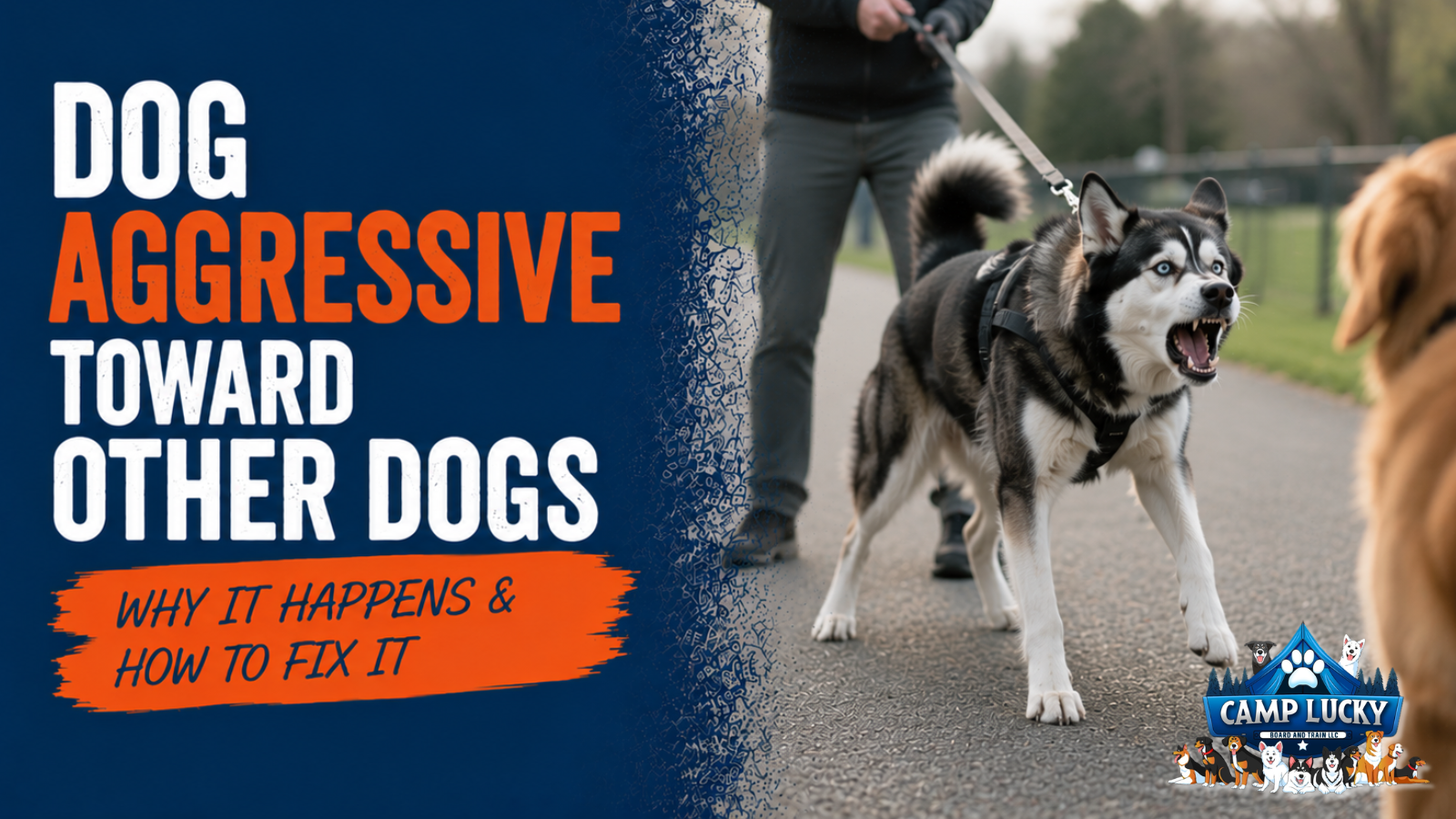
If your dog suddenly lunges at other dogs on walks, you’re probably blaming the wrong thing.
New research reveals the real culprit behind dog aggression isn’t what most owners think and traditional training methods might be making it dangerously worse.
Key Takeaways
- Most dog-on-dog aggression stems from fear and anxiety, not dominance or territorial behavior
- The critical 3-16 week socialization window determines a dog’s lifelong ability to interact safely with other dogs
- Suppressing warning signs like growling creates more dangerous dogs that bite without warning
- Force-free desensitization and counterconditioning methods address the root emotional causes of aggression
- Punishment-based training often worsens reactive behavior, and traditional group classes can be detrimental for reactive dogs if not carefully managed to avoid over-threshold arousal
Every dog owner dreads that moment when their beloved pet suddenly transforms into a snarling, lunging force on the leash.
The embarrassment, the fear, the isolation that follows can consume daily life.
But understanding the real science behind dog-on-dog aggression reveals a surprising truth that changes everything about how these cases should be approached.
Fear, Not Dominance: The Real Science Behind Dog-on-Dog Aggression
The dominance myth has dominated dog training conversations for decades, but veterinary behaviorists and organizations like the ASPCA now confirm that fear and anxiety drive the overwhelming majority of inter-dog aggression cases.
When a dog attacks another dog, it’s rarely about establishing pack hierarchy or showing dominance.
Instead, it’s a frightened animal using the only communication method it knows to create distance from a perceived threat.
Research reveals that dogs displaying aggression often exhibit subtle stress signals before escalating to overt aggressive behaviors.
Lip licking, yawning, or looking away aren’t signs of guilt or submission, they’re appeasement signals indicating underlying discomfort and fear.
Understanding this distinction completely reframes how owners should respond to their dog’s reactive behavior.
Our professional trainers at Camp Lucky Board and Train emphasize that addressing the emotional root cause, rather than simply suppressing aggressive displays, creates lasting behavioral change.
This fear-first approach explains why punishment-based methods often fail spectacularly, and why effective training focuses on changing how dogs feel about other dogs rather than just controlling what they do.
The Critical Socialization Window Most Dog Owners Miss
The 3-16 Week Developmental Period
The foundation of most inter-dog aggression problems lies in a narrow developmental window that closes before many puppies even arrive in their new homes.
Research established by Scott and Fuller identifies a critical socialization period from approximately 3 to 16 weeks of age, during which a puppy’s brain remains uniquely plastic and experience-dependent.
During this window, exposure to other dogs, varied environments, sounds, and handling literally shapes a dog’s baseline anxiety threshold for life.
Dogs that miss adequate socialization during this period may never learn to read canine body language correctly, defaulting to threat responses rather than appropriate social communication when encountering other dogs.
How Under-Socialization Creates Fearful Adult Dogs
Under-socialization doesn’t just mean a dog that’s shy around others, it creates adults who fundamentally misinterpret normal dog behavior as threatening.
A play bow might register as an attack posture.
Normal investigative sniffing could trigger a defensive response.
These dogs aren’t being aggressive by choice; they’re responding to what their under-developed social skills interpret as danger.
The tragedy is that most of this developmental programming happens before owners have any control.
Puppy mill environments, early separation from littermates, or well-meaning but overly protective early handling can all contribute to adult dogs who live in a state of constant social anxiety around their own species.
Why Adolescent Hormones Trigger Sudden Aggression
Perhaps the most heartbreaking scenario for dog owners is the previously friendly puppy who “suddenly” becomes aggressive around 8 to 18 months of age.
This isn’t a training failure, it’s a predictable biological event.
Hormonal surges during adolescence, including increases in testosterone and vasopressin, directly correlate with the onset or intensification of inter-dog aggression.
While hormonal changes during adolescence affect both sexes, the significant surges directly correlating with the onset or intensification of aggression are primarily observed in intact dogs.
Neutering can reduce these surges and their associated behaviors, though neutered dogs still experience hormonal influences.
The adolescent brain becomes more sensitive to perceived threats, more reactive to social conflict, and less capable of impulse control.
Understanding this developmental reality helps owners recognize that their dog isn’t “turning bad,” they’re navigating a biological storm that requires professional intervention.
What Your Dog’s Body Language Really Means
Early Warning Signs Owners Often Miss
Dog aggression almost never appears without warning, the signals are simply misunderstood or ignored.
The progression typically follows a predictable cascade: subtle appeasement signals (lip licks, yawns, look-aways), followed by stiffening or freezing, then piloerection (raised hackles), and finally the growl or bark that most owners recognize as problematic.
A dog exhibiting a hard stare, forward body posture, or high tail carriage is communicating very different information than one showing defensive body language with lowered posture and avoidance attempts.
Yet both may escalate to similar-looking aggressive displays, requiring completely different training approaches based on the underlying emotional state.
Why Suppressing the Growl Makes Dogs More Dangerous
One of the most dangerous outcomes of traditional correction-based training is the suppression of warning signals.
When dogs are punished for growling, they don’t stop feeling threatened, they simply stop communicating their discomfort.
This creates dogs who bite “without warning” because their early warning system has been systematically disabled through punishment.
The growl serves as a vital communication tool that prevents escalation to biting.
A dog that growls is saying “I’m uncomfortable, please give me space.”
Punishing this communication is like disconnecting a smoke detector, it doesn’t prevent the fire, it just removes the warning system that could prevent disaster.
Why Traditional Training Approaches Fail
When Group Classes Can Make Reactive Dogs Worse
For dogs with inter-dog aggression, standard group obedience classes can be counterproductive.
The proximity to multiple unfamiliar dogs often creates a sustained state of over-threshold arousal, which makes effective learning impossible and can deepen fearful associations.
Dogs in this heightened state cannot process commands or form new associations, their brains are in survival mode.
Group settings also create unpredictable interactions and uncontrolled exposures that can deepen fearful associations rather than improve them.
A single negative encounter in a group class can undo months of careful behavior modification work, creating stronger negative associations with other dogs.
Punishment-Based Methods Increase Fear
Research consistently demonstrates that punishment-based interventions for aggression suppress outward displays without addressing underlying fear.
Dogs trained through corrections may appear “better” because they’re no longer reacting visibly, but their internal emotional state remains unchanged or worsens.
This creates a particularly dangerous scenario: a dog that has learned not to show warning signs but still feels threatened.
These dogs often escalate directly to biting because their communication ladder has been systematically dismantled through punishment, leaving them with fewer options when they feel cornered.
Why Training Over-Threshold Dogs Backfires
The concept of “threshold” is vital to understanding why most owner-led training attempts fail.
A dog that is already reacting, barking, lunging, or fixated on another dog, is over threshold and finds it extremely difficult to process information and learn new behaviors.
Training in this state actually rehearses and strengthens the aggressive response.
Effective behavior modification requires working at sub-threshold distances where the dog notices the trigger but remains calm enough to process information and form new associations.
Most owners inadvertently practice aggression by repeatedly exposing their dogs to situations that trigger reactive responses.
The Evidence-Based Solution: Desensitization and Counterconditioning
How DS/CC Changes Your Dog’s Emotional Response
Desensitization and counterconditioning (DS/CC) is a highly effective and recommended method for treating fear-based aggression, widely utilized by veterinary behaviorists and animal welfare organizations.
This protocol doesn’t teach dogs to tolerate their fear, it changes what they feel about other dogs at a neurological level.
The process works by presenting the trigger (another dog) at a distance where the dog notices but doesn’t react, then immediately delivering high-value food rewards.
When executed correctly, dogs begin to anticipate something wonderful when they see other dogs, creating a genuine positive emotional association rather than fearful anticipation.
Creating Positive Associations Below the Threshold
Success depends entirely on maintaining the dog below their reaction threshold throughout the process.
This requires careful distance management, understanding individual trigger levels, and recognizing the subtle body language changes that indicate a dog is approaching threshold.
The goal is to see a conditioned emotional response (CER) where the dog begins looking to the handler with relaxed, happy body language upon seeing another dog.
This indicates that the brain’s emotional processing has genuinely changed, the dog now associates other dogs with positive experiences rather than threats.
Why Force-Free Methods Work for Complex Cases
Force-free training approaches prove particularly effective for complex aggression cases because they address the root emotional cause rather than suppressing symptoms.
Dogs with multiple triggers, bite histories, or high anxiety levels require careful emotional reconditioning that punishment-based methods cannot provide.
These methods also preserve the dog’s agency and communication, allowing them to express discomfort safely while learning new coping strategies.
Rather than creating robotic compliance through suppression, force-free approaches build genuine confidence and emotional resilience.
Intensive, Structured Programs for Severe Aggression Cases
Dogs with established aggression patterns, bite histories, or severe reactivity often require intensive intervention that goes beyond weekly training sessions.
Professional board and train programs can provide the structured environment and consistent repetition necessary for deep behavioral change, particularly when combined with proper owner education and transition support.
The key to successful intensive programs lies not in promising a “quick fix” but in building a solid foundation of communication, impulse control, and positive associations that owners can maintain long-term.
Realistic timelines for severe cases often span months to over a year, with ongoing management being a permanent part of the dog’s life rather than a temporary training phase.
Effective programs focus on changing the dog’s emotional response to triggers while simultaneously building alternative behaviors and strengthening the human-dog communication system.
This multi-faceted approach addresses both the underlying fear and provides practical management tools for real-world situations.
For dog owners struggling with aggression issues, professional guidance from our experienced trainers can provide the structured approach needed to address complex behavioral challenges safely and effectively through our specialized programs at Camp Lucky Board and Train.