Your dog isn’t stubborn when it lunges at every passing dog, it’s overwhelmed.
A trainer breaks down the exact distance, threshold, and conditioning techniques that separate lasting progress from walks that never get easier.
Key Takeaways
- Reactivity often comes from fear, frustration, or over-arousal rather than defiance, which is why two dogs with the same bark can need very different plans
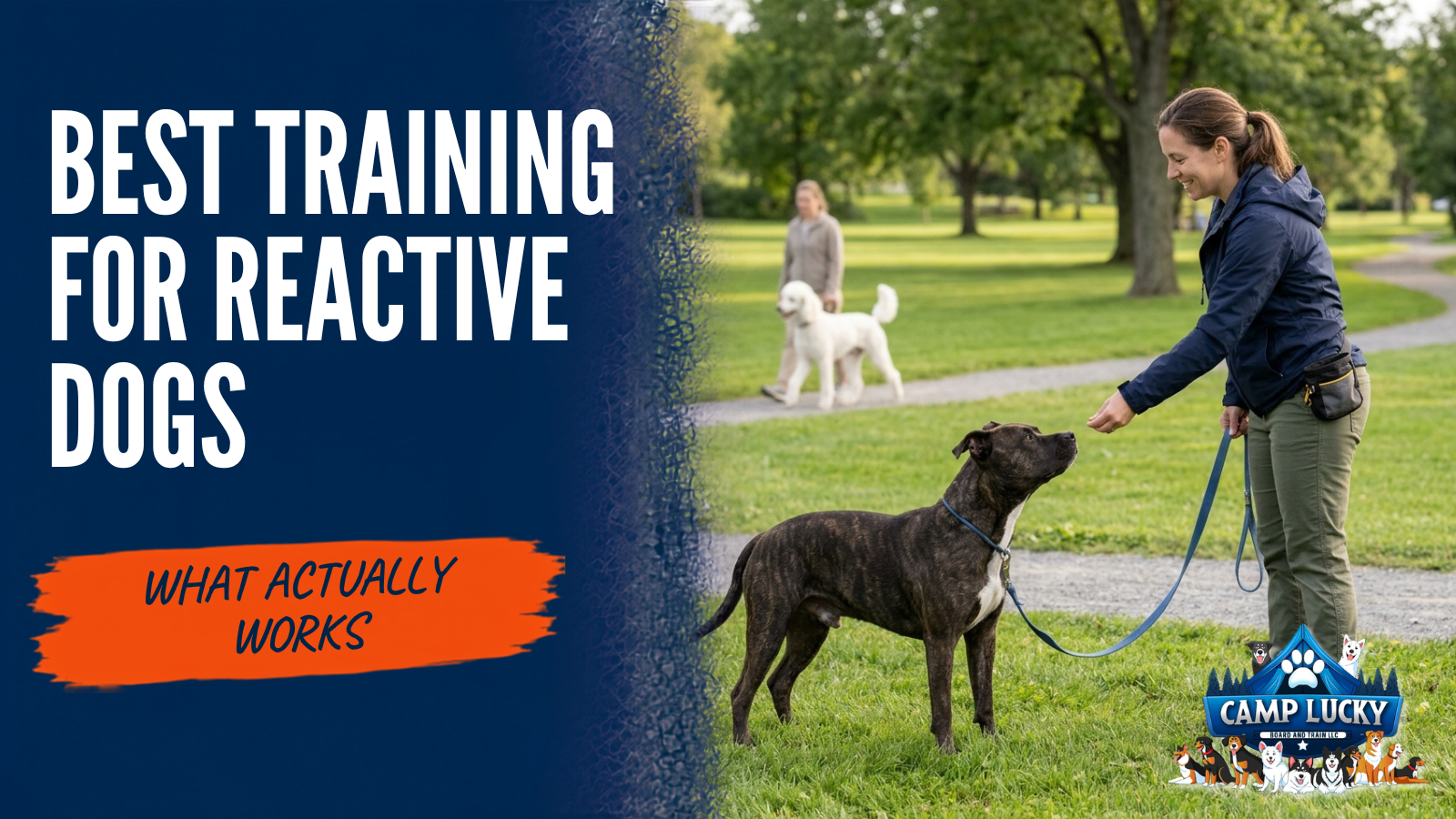
- Working at a distance where a dog can still notice a trigger without reacting is the foundation that makes counterconditioning and desensitization possible
- Avoiding avoidable reactions matters as much as the training itself, since every rehearsed outburst makes the next one more likely
- Dogs with significant behavioral needs sometimes benefit from more structured, round-the-clock practice than a weekly session can offer
- A clear path exists for figuring out whether a dog’s reactivity needs simple management tweaks or a deeper behavioral program
A dog that barks and lunges at the end of the leash is not being difficult for the sake of it.
Something about that moment, whether it is another dog, a stranger, a skateboard, or a mail truck, is triggering a reaction the dog cannot easily turn off.
Understanding why that reaction happens, and what actually changes it, makes the difference between a walk that feels like a battle and one that feels manageable again.
Why Your Dog Reacts This Way
Reactive behavior is best understood as a response to a trigger, not a failure of obedience.
A dog that already knows how to sit and stay can still erupt the moment another dog rounds the corner, because the barking and lunging are not about ignoring a command.
They are an attempt to make something uncomfortable go away, or to reach something the dog desperately wants and cannot get to.
That distinction matters because it changes where training energy should go.
Teaching more commands rarely fixes a reaction rooted in fear or overwhelming excitement.
The more useful question is what the dog is feeling in that moment, and how to change that feeling over time.
Recognizing this also takes pressure off owners who have tried basic obedience classes without much success.
A dog that already knows the right commands but still reacts is overwhelmed rather than stubborn, and overwhelmed dogs need a different kind of help than disobedient ones.
Fear, Frustration, or Over-Arousal?
Not every reactive dog is reacting for the same reason, even when the behavior looks identical from across the street.
Some dogs are genuinely afraid and want distance from the trigger.
Others are frustrated because they want to greet or chase something and the leash is in the way.
Still others are so overstimulated that their brain simply cannot process calm behavior in that moment.
Why the Same Bark Can Mean Different Things
A dog straining toward another dog while barking high and fast, tail up and loose, is often showing frustrated greeting behavior rather than aggression.
A dog backing away while barking low, with a tucked tail and stiff body, is usually communicating fear.
A dog that cannot settle even when there is no trigger in sight, reacting to anything that moves, may be dealing with general over-arousal that spills into every walk.
These differences matter for treatment.
A fearful dog generally needs more distance and slower exposure.
A frustrated greeter may need structured practice at getting calm access to things it wants.
An over-aroused dog often benefits from settling exercises before a walk even begins, such as practicing a calm down-stay or a few minutes of structured play to take the edge off.
Matching the plan to the actual emotion behind the behavior, rather than treating every reactive dog the same way, separates lasting progress from a program that only manages symptoms for a while.
The Distance Rule That Changes Everything
Distance is the single most useful tool in reactive dog training, and it works because it directly controls how intense a trigger feels to the dog.
A dog that reacts explosively up close might stay completely calm watching the same trigger from fifty yards away.
That gap between a trigger being too close and being tolerable is where real training happens.
Finding Your Dog’s Threshold
A dog’s threshold is the point at which it can still notice a trigger, take treats, and respond to cues without tipping into a full reaction.
Below threshold, the dog is thinking.
Above threshold, the dog is reacting on instinct, and no amount of cueing or correcting teaches much in that state.
Finding this threshold takes some observation.
A dog that stiffens, stops eating, or stares fixedly at a trigger is approaching its limit even if it has not barked yet.
Backing away at that first sign, rather than waiting for the bark or lunge, keeps the dog in a state where learning can actually happen.
Over repeated sessions, that threshold distance tends to shrink as the dog builds more positive history with the trigger.
Simple Moves: U-Turns, Barriers, and Wide Curves
A few practical moves can keep a dog under threshold without turning every walk into a stressful guessing game.
- A calm U-turn, practiced first in a quiet spot with no trigger around, gives a dog a familiar escape route that does not involve panic.
- Stepping behind a parked car, hedge, or fence corner creates an instant visual barrier that can take a trigger out of view entirely.
- Taking a wide curve across a street or open area, rather than walking straight toward an oncoming trigger, adds distance gradually instead of forcing a sudden close encounter.
These moves work best when they are practiced before they are needed.
A dog that has rehearsed a U-turn dozens of times in a quiet backyard responds to it far more reliably than a dog hearing the cue for the first time in a moment of panic.
Building Calmer Associations Over Time
Once distance is under control, the next job is changing how a dog feels about the trigger itself.
Counterconditioning and desensitization are the two techniques that make this possible, often used together but working in slightly different ways.
Counterconditioning: Trigger First, Then Reward
Counterconditioning means pairing the sight of a trigger with something the dog genuinely loves, almost always food.
The order matters: the trigger should appear first, and the treats should start flowing once the dog notices it, continuing for as long as the trigger stays in view.
This sequencing is a standard recommendation from the Wisconsin Humane Society.
Over repeated sessions, the dog starts to associate the appearance of another dog or stranger with good things happening, rather than with tension.
The goal is a shift in the dog’s gut reaction, from alarm to something closer to curiosity or calm anticipation of a treat.
Desensitization: Small Steps, Repeated Often
Desensitization works alongside counterconditioning by controlling how much of the trigger the dog faces at once.
Rather than exposing a dog to the full intensity of a trigger right away, the Merck Veterinary Manual describes breaking the experience into small, manageable steps, such as greater distance, shorter duration, or a quieter version of the trigger.
Progress usually comes from changing only one variable at a time.
If distance is being shortened, duration and setting should stay the same until the dog shows it can handle the closer distance calmly.
Rushing multiple variables at once is one of the most common reasons desensitization plans stall or backslide, and frequent, patient repetition tends to matter more than any single breakthrough session.
Stop Rehearsing the Reaction
Every time a dog fully reacts to a trigger, that reaction gets a little more practiced.
Management is about preventing those avoidable rehearsals in the first place, not because a single bad walk ruins progress, but because repeated rehearsal makes the behavior more automatic over time.
Smarter Routes and Quieter Walk Times
Choosing when and where to walk can prevent a large share of unplanned encounters before they ever happen.
Early morning or late evening walks tend to have fewer dogs and people out, and routes through open spaces give more room to spot a trigger early and change course.
Avoiding the busiest stretch of a neighborhood for a few weeks is a reasonable adjustment, simply removing the hardest version of the test until the dog is ready for it.
When a Trigger Appears Without Warning
Surprises happen even with careful planning, and having a default response ready matters more than having a perfect one.
If a trigger appears suddenly and there is no time for a U-turn, scattering a handful of treats on the ground while calmly moving away can redirect a dog’s attention and create space at the same time.
If the dog is already reacting, the priority shifts to simply increasing distance rather than attempting commands the dog cannot process in that state.
Ending the walk early after a tough encounter is also a reasonable choice, especially if another trigger shows up soon after, since a stressed dog needs time to settle before more exposure does any good.
When a Dog Needs More Structure
Some dogs make steady progress with distance management and gradual conditioning worked into daily walks.
Others, especially those with a longer history of reacting or more intense triggers, benefit from a more immersive setting where practice happens many times a day instead of once or twice.
Round-the-Clock Practice in a Real Home
A board and train program built around a trainer’s actual home, rather than a kennel facility, gives a reactive dog repeated chances to practice calm behavior around real foot traffic, mealtimes, doorways, and daily routines.
We at Camp Lucky Board and Train structure our programs this way, with dogs living in a trainer’s home rather than a kennel so that skills like door manners and calm greetings get practiced in the settings where they actually matter.
That kind of repetition, multiple times a day across one to four weeks, can build a level of consistency that is hard to replicate with a single weekly session.
Matching the Program to the Dog’s Needs
Not every reactive dog needs the same amount of time or intensity.
Lower-level reactivity, such as mild leash pulling or situational anxiety around specific triggers, often fits into a shorter window once basic obedience and public exposure are in place.
Dogs with a longer history of reacting, or more significant behavioral needs layered on top of reactivity, typically need more weeks of structured, repeated practice before the new response becomes dependable.
No controlled research currently compares board and train outcomes specifically for reactive dogs, so any claims about results from this format, including this one, are best treated as informed professional judgment rather than settled fact.
Why Owner Coaching Seals the Progress
A dog that learns to stay calm around triggers during a structured program still has to bring that skill home to an owner who holds the leash every day afterward.
Without clear handoff instruction, even solid training can fade if the owner does not know how to read the dog’s early warning signs or maintain the same distance rules that made progress possible in the first place.
This is why the handoff conversation matters as much as the training itself.
A good handoff walks an owner through exactly what the dog has learned, what cues and distances to use, and what to watch for as the dog settles back into its normal routine.
Owners who feel confident using these tools in real situations tend to stick with the plan longer, which matters because reactive dog training is rarely a one-and-done fix.
The training stays effective through an ongoing partnership between what the dog has learned and what the owner continues to practice.
Calmer Walks Take Time, Not Shortcuts
Reactive dog training rewards patience far more than it rewards intensity.
Quick fixes that suppress a reaction without changing how the dog feels about the trigger tend to wear off, while steady work at the right distance, repeated often enough, builds a foundation that holds up in real life.
Progress may look like a slightly longer glance at a passing dog without a bark, or a walk that ends without a single U-turn needed.
Small shifts like these, tracked over weeks rather than days, are the real sign that a plan is working.
For owners ready to start putting these ideas into practice, working with a professional reactive dog training program can help translate the right distance, pacing, and handoff coaching into a plan built around one specific dog.